
Protection from sun, oil and water
Sealcoating in Antioch, CA
In a hot, dry climate, sunlight ages asphalt faster than traffic does. Sealcoat slows it down.
- Free on-site estimates
- Itemized written quote: base depth and asphalt thickness listed
- City and County right-of-way permits explained before work is scheduled
Why Antioch Asphalt Needs Sealing
Sealcoating is a thin protective coat spread over asphalt pavement. It does not add strength, but it shields the binder in the asphalt from sunlight, oxygen, oil drips and water. In Antioch, where the average July high is above 91 degrees and summers run long and dry, ultraviolet light oxidizes unsealed asphalt and turns it gray, brittle and prone to raveling. A sealcoat every few years keeps the surface flexible and black and keeps winter rain from soaking in through fine cracks.
When to seal
New asphalt needs time to cure before it is sealed: HomeGuide says to wait three to six months. After that, it suggests resealing every 2 to 10 years depending on the sealer and the climate; lots and heavily used driveways are at the shorter end. Sealing needs dry weather between about 50 and 95 degrees, so in Antioch the season runs roughly spring through fall, avoiding winter storms and the hottest afternoons.
Preparing the surface
Sealer only bonds to clean pavement. We blow off and sweep the surface, scrape away dirt and weeds along the edges, treat oil spots so the coat will stick, and fill cracks first. Sealcoat over open cracks just hides them for a season.
Sealer choices
HomeGuide describes two common types. Coal tar emulsion resists fuel and oil well but has been banned in many areas because of health and runoff concerns. Asphalt polymer emulsion is considered more environmentally friendly but can stain from gas and oil. For homes we generally use asphalt emulsion, and for lots we match the product to traffic and spills.
Curing and reopening
Most sealers can be walked on after one to three hours and driven on after 12 to 72 hours, depending on temperature and humidity. We schedule lots in sections and tell you when each area can reopen.
Seal and stripe together
For parking lots, sealcoat covers the existing lines, so restriping follows. Doing both on one visit means one closure, and gives you a chance to update the layout, including accessible spaces under the 2010 ADA Standards.
Signs it is time to reseal
- The surface has turned from black to gray
- Fine cracks and loose stones appear, especially in the wheel paths
- Water soaks in instead of beading on the surface
- Oil and fuel stains have softened spots on the pavement
If several of these show up, sealing soon is far cheaper than repairs later. We will tell you honestly if the pavement is already past the point where sealcoat helps.
What This Covers
Sealcoating covers the prep and the coat itself.
Cleaning and edging
Debris, dirt and weeds removed so the sealer bonds.
Oil spot treatment
Stains primed so the coat does not peel over them.
Crack filling
Open cracks filled before the sealcoat goes on.
Sealcoat application
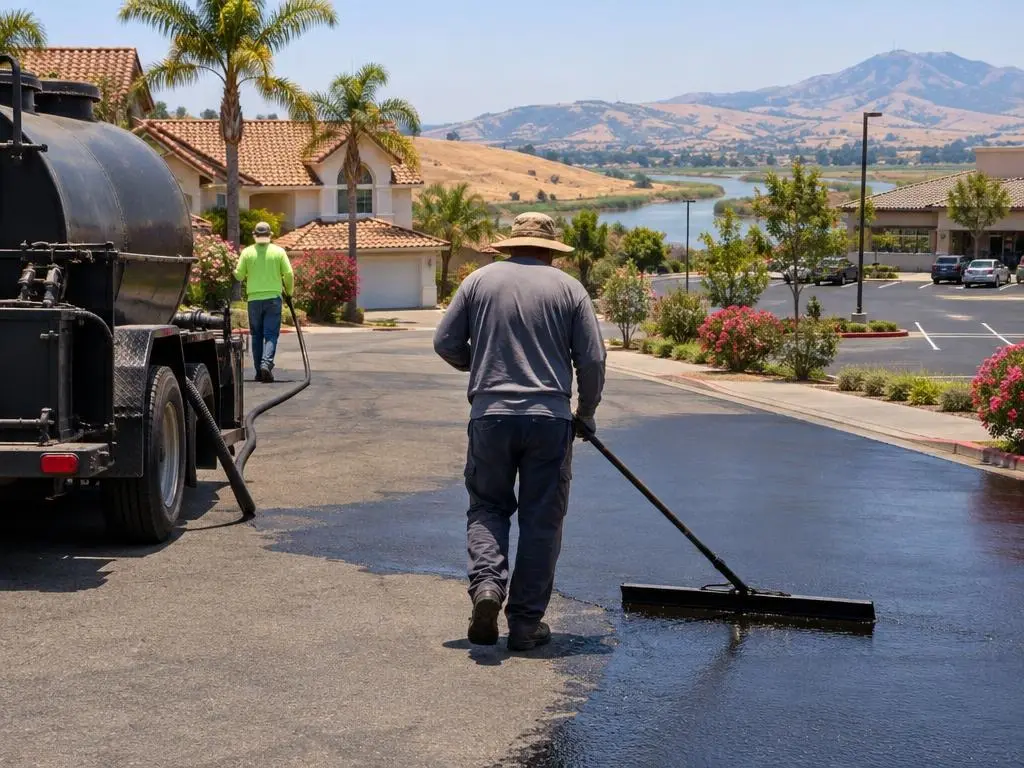
Asphalt emulsion applied by squeegee or spray in even coats.
Typical Sealcoating Costs
| Item | Published national range |
|---|---|
| Driveway sealing (HomeGuide) | $1 to $2 per sq ft |
| National average job (HomeGuide) | About $600 ($110 to $1,900) |
| 20 x 20 ft, 400 sq ft (HomeGuide) | $400 to $800 |
| 24 x 24 ft, 576 sq ft (HomeGuide) | $580 to $1,200 |
| Parking lot sealcoat (HomeAdvisor) | $0.15 to $0.30 per sq ft |
National ranges from published cost guides; each guide builds its numbers differently. Bay Area labor and hauling often run above national averages, and removal, clay subgrade repair, slope and permit work move the total. Your written estimate is the price.
How It Works
1. Check the pavement
We note cracks, oil stains and any areas that need repair before sealing.
2. Quote and date
Prep, crack filling and coats priced; a dry-weather date set.
3. Prep and seal
Surface cleaned, cracks filled, sealer applied.
4. Cure and reopen
Barricades left up until the coat can carry traffic.
Sealcoating Questions
How often should I sealcoat my driveway in Antioch?
Every few years is typical. HomeGuide gives a range of 2 to 10 years depending on the sealer and climate, and Antioch's long dry summers push toward the shorter end.
Can I seal a brand-new driveway?
Not right away. New asphalt should cure three to six months before sealcoat goes on.
Does sealcoat fix cracks?
No. Cracks are filled first; sealcoat is a protective layer, not a repair.
How long until I can drive on it?
Usually 12 to 72 hours depending on heat and humidity. Foot traffic is generally fine after one to three hours.
Sealcoating Service Areas
- Asphalt Paving in Antioch, CA
- Asphalt Paving in Pittsburg, CA
- Asphalt Paving in Oakley, CA
- Asphalt Paving in Brentwood, CA
- Asphalt Paving in Bay Point, CA
- Asphalt Paving in Discovery Bay, CA
- Asphalt Paving in Clayton, CA
- Asphalt Paving in Concord, CA
- Asphalt Paving in Martinez, CA
- Asphalt Paving in Bethel Island, CA
- Asphalt Paving in Knightsen, CA
- Asphalt Paving in Byron, CA
- Asphalt Paving in Rio Vista, CA
- Asphalt Paving in Pleasant Hill, CA
- Asphalt Paving in Clyde, CA
- Asphalt Paving in Pacheco, CA
- Asphalt Paving in Mountain House, CA
- Asphalt Paving in Tracy, CA
- Asphalt Paving in Benicia, CA
- Asphalt Paving in Vine Hill, CA
Get a Sealcoating Estimate
Free estimates for sealcoating in Antioch and East Contra Costa County.